Today, businesses can no longer rely on staying within their home turf. Reaching out to new markets across the globe is essential for expansion. However, simply translating your content won’t cut it. To truly resonate with diverse audiences, you need to immerse yourself in their cultures, understand their preferences, and adapt to their regulations. Enter localization—the secret sauce for making your brand feel at home in any market. Let’s delve into the essence of localization and explore six powerful benefits of localization that can propel your business to new heights.
Dive into the world of localization
Imagine browsing a website or using a product that seems to understand you perfectly—not just your language, but your culture, preferences, and even the small nuances that make communication feel personal. This seamless experience is the power of localization.
Customizing your brand to fit local contexts
What exactly is localization?
Localization is the art of transforming your products, services, or content to seamlessly blend with the linguistic, cultural, and regulatory fabric of a specific region. It’s much more than just swapping out words from one language to another. Think of it as customizing your brand’s experience to feel like it was made just for that market. This includes tweaking visuals, colors, formats, currency, and even the tone to make sure your message hits home with the local audience.
Why localization matters
In a world where the global marketplace is just a click away, your ability to connect with diverse audiences is your ticket to success. Localization is critical because it ensures your brand speaks the language of the heart and culture, not just the tongue. Here’s why going local is a game-changer:
Cultural resonance: Localization allows you to align your message with the local culture’s values, beliefs, and daily life, making it far more impactful.
Language finesse: Beyond literal translation, localization captures local idioms, expressions, and nuances, making your communication not just understood, but truly felt.
Building trust through respect for local customs and language
Trust building: When you honor the local customs and speak in their language, you forge a bond of trust that’s hard to break.
Market breakthrough: Overcoming cultural and linguistic barriers through localization smooths your path to entering and thriving in new markets.
Regulatory harmony: Localization ensures your offerings meet local legal standards, keeping you compliant and out of trouble.
Competitive distinction: By offering a tailored experience that your competitors might miss, you stand out and gain a loyal following.
Benefits of localization: Elevated customer experience
A competitive edge like no other
Localization sharpens your competitive edge by allowing you to deliver products, services, and content that are perfectly attuned to the desires and needs of local markets. When customers see that your brand doesn’t just understand but genuinely respects their culture, they’ll choose you over others. This personalized approach helps you carve out a unique space in a crowded market, fostering deep connections and brand loyalty that lasts.
Skyrocketed SEO and online presence
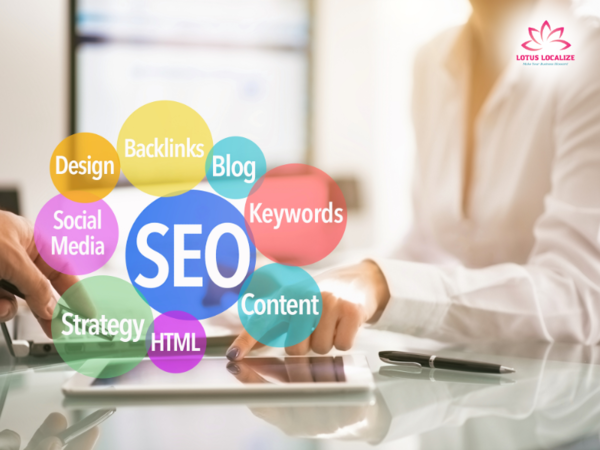
Enhancing SEO and online presence through localization
Localizing your content is like giving your website a turbo boost in search engine rankings across various regions. By weaving in locally relevant keywords, fine-tuning for regional search engines, and creating content that clicks with local audiences, you elevate your visibility online. This not only draws more visitors to your site but also engages them on a deeper level, as your content speaks directly to their cultural context and needs.
Fortified global brand identity
A globally recognized brand that feels local everywhere? That’s the magic of localization. By carefully adapting to local nuances while staying true to your core identity, you create a brand that resonates with customers across different regions. This builds stronger loyalty, enhances your reputation as a culturally savvy business, and opens doors to even greater global opportunities.
Navigating the legal landscape of different countries can be tricky, but localization keeps you on the right track. By adapting your products, services, and marketing materials to meet local laws—from packaging to data protection—you avoid legal snags and fines. More importantly, you earn the trust of customers who see your brand as responsible and law-abiding.
Amplified sales and revenue
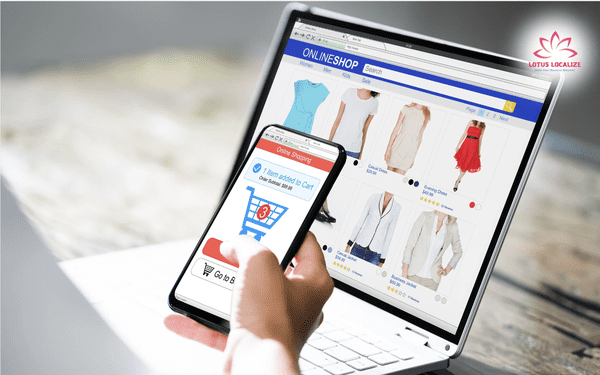
Boosting sales through localized offerings
Localization has the power to supercharge your sales figures. When your offerings are tailored to fit the purchasing habits of local customers—whether through familiar payment methods, local-language customer support, or culturally relevant marketing—you remove obstacles to buying. This translates to higher conversion rates, fewer abandoned shopping carts, and a significant boost in sales and revenue.
All in all, in the race for global market share, localization is no longer just an option—it’s a necessity. By investing in localization, you can enhance customer experience, gain a competitive advantage, improve your SEO, and ultimately, boost your sales and revenue. You’ll also strengthen your global brand presence and ensure compliance with local regulations, all while building meaningful connections with your audience. As the world continues to shrink, those who prioritize localization will be the ones who stand out and thrive on the global stage. Are you ready to unlock the full potential of your business? Start localizing today!
If you have any questions or need assistance with localization services: game localization, app localization, website localization, software localization… please contact Lotus Localize immediately at 0866 224 968 or visit the website: lotus-localize.com for advice on the best solutions!
In today’s hyper-connected world, the ability to communicate effectively across languages and cultures is a non-negotiable skill for businesses and organizations aiming to go global. But crafting a message that resonates universally is not as simple as translating text into a new language. The real challenge lies in connecting with diverse audiences in a way that feels personal and culturally relevant. This is where translation and localization step into the spotlight. These two processes, while closely related, play distinct roles in bridging language barriers and cultural gaps. For businesses and individuals aiming to succeed globally, understanding the differences and knowing when to use each approach is key to maximizing impact. Let’s dive deep into the concept of translation vs localization and how these strategies can empower your global communication efforts.
The aerospace industry operates on a global scale, involving manufacturers, airlines, defense organizations, and space exploration agencies. Effective communication across different languages is crucial for safety, regulatory compliance, and operational efficiency. Aerospace translation plays a vital role in ensuring that technical manuals, legal documents, and regulatory materials are accurately translated, allowing seamless international collaboration. This article explores the importance of aerospace translation, the challenges it presents, and emerging trends shaping its future.
In the global pharmaceutical industry, accurate and compliant label translation is not just a regulatory requirement—it is a matter of patient safety. A minor error in pharmaceutical label translation can lead to severe health risks, legal complications, and financial losses for pharmaceutical companies. This article explores the importance of pharmaceutical label translation, the challenges involved, and the best practices to ensure accuracy and compliance.
As analyzed and compared in the previous article, it can be seen that while translation and interpretation have distinct characteristics and properties
As companies expand into international markets, the demand for high-quality multilingual content has grown rapidly. One critical yet often overlooked element in this process is product manual translation. While marketing materials and websites typically receive more attention, the translation of user guides, instruction booklets, and technical manuals is equally essential — not just for legal compliance, but also for user safety and brand reputation. This article explores why product manual translation matters, the risks of neglecting it, and how to ensure the best results through professional translation strategies.
In today’s fast-paced digital world, media content is no longer bound by borders. Whether it's a YouTube video, a brand campaign, or an interactive e-learning module, audiences expect seamless experiences in their own language and cultural context. That’s where media localization steps in.
In today’s borderless digital world, e-commerce has turned the globe into one massive marketplace. But how do businesses truly break through and win over hearts from Tokyo to Toronto, from Paris to São Paulo? The secret lies in e-commerce localization—an approach that goes beyond translation and taps into the cultural pulse of each region. It’s not just about selling products; it’s about creating a shopping experience that feels native, personal, and trustworthy to diverse audiences. Let’s explore what e-commerce localization is, why it’s crucial for your global strategy, and how to master it.
In an increasingly globalized market, effective communication across different cultures is more important than ever. Transcreation offers a powerful solution for businesses looking to ensure their content resonates with diverse audiences. Unlike standard translation, which focuses solely on word-for-word accuracy, transcreation adapts content to maintain its original impact while fitting new cultural contexts. Transcreation involves not just translating text but reimagining it to align with local cultures, customs, and emotional responses. This process is essential for brands that want to maintain their message’s impact while engaging authentically with international audiences.
Lotus Localize is the leading translation and localization company,
specializing in major Asian languages. Translation, interpretation,
localization, subtitling, voice-over, and dubbing make up our services.